
Per-Variant Projections
Each SKU gets its own forecast row. No aggregated guesswork at the product level.
INVENTORY FORECASTING
Per-variant inventory projections for the next 12 to 60 months, tied to your actual sales velocity and planned marketing spend. Place the PO earlier. Stop paying rush fees.
Reordering by gut feel means your bestseller goes out of stock two weeks before the container arrives, while a slow mover takes up warehouse space for months. The data to prevent both problems already exists in your sales history. It just needs to be projected forward at the SKU level.
Inventory Forecasting shows a table of your product variants with projected monthly unit demand for each one. The columns extend 12, 24, or 60 months into the future based on your historical sales patterns. Each row is a specific variant, so you know exactly how many units of each SKU you'll need, not just a product-level estimate.
If you sell bundles or kits, the forecast decomposes them into their component parts. A "Starter Kit" that contains three individual products gets broken down so your supply chain team stocks the right raw materials, not finished bundles. You configure which variants are base components and which are composites, and the forecast handles the math.
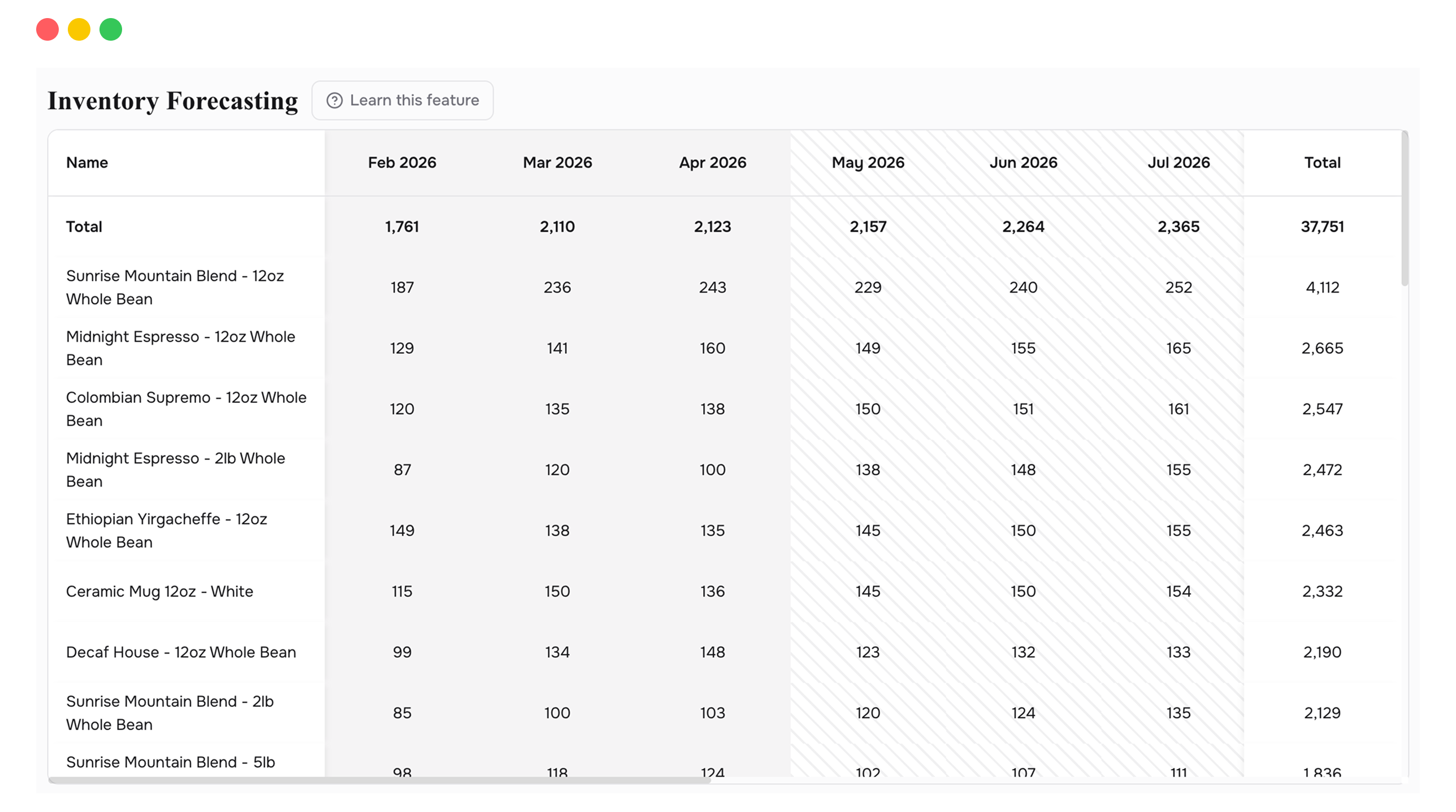
Each SKU gets its own forecast row. No aggregated guesswork at the product level.
From next quarter's PO to multi-year supply planning.
Adjust your planned ad spend and watch inventory projections change. Align your supply chain with your growth plan.
Kits and bundles are broken into component variants. Stock the parts, not the finished product.
Define which products combine into bundles using a visual transfer list. Update anytime.
One-click Excel export with monthly totals and per-variant rows. Share directly with your 3PL or purchasing team.
This feature is less about predicting the future and more about ordering correctly. The forecast takes your actual sell-through rate, factors in your planned marketing spend, and tells you what you need per variant per month. The insight isn't a surprising number. It's the confidence to place a PO three months early because you can see the demand curve instead of guessing at it.
Find your bestseller variants in the forecast. Look 3 to 6 months ahead. Place that purchase order now, at regular lead time pricing, instead of paying rush fees when you run out.
Before committing to a $40K ad spend increase, check whether your supply chain can handle the 15% demand increase it implies. The forecast answers that question before you ask your warehouse.
If you sell a kit with three components, share the decomposed forecast with your purchasing team so they stock the right raw materials in the right quantities, not finished bundles sitting in a warehouse.
Sit down with your ops team, change the monthly ad spend assumption, and watch the inventory numbers shift. Plan supply and demand in the same meeting instead of sequencing them weeks apart.
The forecast works the same way. Each variant gets its own row with projected demand. The bundle decomposition feature is optional and doesn't change your results if you only sell individual items.
Not directly. The forecast is locked to your actual sales history to keep projections grounded in reality. The levers you can adjust are the big ones: CAC and monthly ad spend. Everything else derives from your real patterns.
Export the forecast to Excel. Use the monthly totals row to align on expected volume and the individual variant rows for SKU-level purchase orders. Adjust ad spend assumptions together so supply can prepare for different growth scenarios.
Connect your Shopify store in 2 minutes. Your P&L, LTV, unit economics, and forecasts are ready the same day. No credit card required to start.